Spring/Summer 2023, Issue 8, pp. 4–10
[Online 11 Mar. 2023, Article A043]
[PDF]
Public Health, Religion, and Spirituality in Wartime
Avalon Swenson, BS BA[1] & Joshua T.B. Williams, MD[1][2][3]
-
-
The PHRS Bulletin publishes a wide range of articles, including those that explore the intersection of public health, religion, and spirituality in times of crisis. In this piece, Avalon Swenson and Joshua Williams explore the role of religion and spirituality amidst the war in Ukraine. The article was prepared in conversation with Dr. Catherine Wanner, PhD, an anthropologist at Penn State University who has conducted field work in Ukraine since the 1990s, and Nicholas Denysenko, PhD, an expert on Eastern Orthodox Theology and Emil and Elfriede Jochum Professor and Chair, and Professor of Theology, at Valparaiso University.
-
Introduction
For centuries in Ukraine, religion and spirituality have been cultural touchstones that double as sources of healing and resilience during and after trauma.1 In the last hundred years, citizens have endured Soviet executions of Ukrainian leaders, the Stalin-orchestrated Holodomor genocide of 1932-33, and the disaster at Chernobyl in 1986.2,3 On the anniversary of Russia’s February 2022 invasion, we sought to (1) discuss relevant public health and religious background to the Russo-Ukrainian conflict, (2) describe the conflict’s impact on Ukrainian physical, mental, and spiritual health, and (3) highlight individuals, clergy, and faith communities who have promoted public health in war. While we also lament the physical, mental, and spiritual suffering endured by Russian soldiers and citizens, we have limited this article to the plight of Ukrainians; we urge other scholars of religion, spirituality, and public health to take up these questions and others as they pertain to Russian forces and citizens in future work.
The Ukrainian Healthcare System
The Ukrainian public health system has a complex history since its founding in an unreformed Soviet era (ca. 1918).4 Institutional corruption, inconsistent services, heterogeneous access to care, and a lack of accountability for quality have plagued the system since its beginnings. Even before the current invasion, Ukraine had the second highest burden of HIV/AIDS in Europe and ranked 5th in the world for reported multi-drug resistant tuberculosis (MDR-TB) cases.4 Coverage for routine immunizations is low and incapable of preventing disease outbreaks.4 Malnutrition is a chronic concern,2,5-8 and unclean drinking water has been a long-standing problem due to lack of infrastructure maintenance, obsolete sanitation practices, and active destruction due to hostilities from the 20th century onward.9,10 Air contamination by toxic gases and particulate matter, already a problem secondary to failing infrastructure, has only worsened in the wake of ongoing fighting throughout the 21st century.5
On paper, the healthcare system responsible for addressing these problems changed dramatically in 2014 with the Maidan Revolution of Dignity, in which Russian-backed president Viktor Yanukovych was ousted.1 Public health system reformers targeted corrupted leadership, addressed skyrocketing healthcare costs, and planned increases in care access. The result was a new, single payer healthcare system, created in 2017: the National Health Service of Ukraine (NHSU).4 The NHSU threatened historical monopolies and inefficiencies in the healthcare sector with the goal of benefiting individual patients by increasing freedom of choice and improving data collection to inform national and local health priorities. These reforms occurred amidst Russian aggressions, which began in 2014 with the annexation of Crimea and the Donbas War in eastern Ukraine.
Unfortunately, the politicization of healthcare, rampant misinformation, and widespread COVID-19 disruptions have stymied these health reforms.11 For example, in 2018, Ukraine experienced Europe’s largest Measles outbreak.4 Thus, in the aftermath of the COVID-19 pandemic and amid ongoing Russian aggression, preventive services and public health campaigns have been operating under critical strain.4,11-12
Religion and Spirituality in Ukraine
To appreciate the current interstices of public health, religion, and spirituality in Ukraine, one must appreciate how religion permeates Ukrainian culture and history. The national history of Ukraine began with the establishment of a “devout kingdom” by Prince Volodymyr I of Kyiv in 988 upon accepting Christianity. Ukrainian Orthodox parishes were formally brought under Russian jurisdiction in the 15th century following the fall of Constantinople. However, after the collapse of the Soviet Union, advocacy for an independent Ukrainian church arose, peaking in 2014 during the Maidan Revolution. Autocephaly (the granting of independent leadership) was not initially granted by Moscow. Ultimately, the Orthodox Church of Ukraine was founded and officially recognized in 2018, resulting in two separate arms of Orthodoxy in Ukraine, along with the Ukrainian Orthodox Church of the Moscow Patriarchate. While about 70% of Ukrainians profess affiliations with Orthodoxy, the religious landscape beyond the Orthodox Church remains far more diverse than most appreciate. For example, about 10% of the populace identifies as Ukrainian Greek Catholic (with ties to Roman Catholicism), with the remainder identifying as Muslim, Jewish, or Protestant Christian.
Religion – not just in an Orthodox sense – and spirituality continue to be of immense import to the people of Ukraine following the 2022 Russian invasion.4 This escalation of hostilities destabilized life for all in Ukraine,4-5 but this destabilization was further exacerbated by the Russian Orthodox Church’s use of religion to justify the invasion.13 A March 2022 statement from Moscow-based Patriarch Kirill of the Russian Orthodox Church – a figure known to be personally close to and supportive of Vladimir Putin – stated that the Invasion was akin to entering “into a struggle that has not physical, but metaphysical significance.”13 Within the same sermon, Kirill compared dying “in the performance of military duties to ‘God sacrificing his own son, Jesus.’”13 He also portrayed what he termed a “fratricidal war” as a struggle for “eternal salvation” of ethnic Russians.1,13 In response to these messages, parishes in Ukraine and Russian Orthodox churches in neighboring European countries flew Ukrainian flags, condemned Russian violence, and cut ties with the Moscow Patriarchate.1
Impact of the Invasion on Public, Mental, and Spiritual Health
The 2022 invasion has significantly damaged the physical, mental, and spiritual health of Ukrainians, and the Ukrainian public health infrastructure has been unable to meet the enormous demands that have been placed upon it.14 Targeted attacks, such as the one on the maternity and children’s hospital at Mariupol, have directly damaged one in ten Ukrainian hospitals.14 Even for intact hospitals or public health systems, mass displacement has created staffing shortages at all levels.
Public health has suffered immensely. Citizens suffer from polluted drinking water, increased air pollution, decreased medication availability, and limited access to medical equipment.4-5,10-12 While Ukraine remains a significant agricultural producer, the distribution of food products during war and their exports through a Russian-controlled Black sea have disrupted supply chains and contributed to food scarcity. The destruction of industrial facilities coupled with compromised sanitation has created ideal environments for communicable diseases, causing rising rates of cholera.5 Further interruption in routine vaccination programs have been linked to two cases of paralytic polio.15 Fears of a second mass measles outbreak, akin to the 2018 epidemic, abound. COVID-19 vaccinations have also stalled, with only ~39% of the populace vaccinated by the summer of 2022.16 Antimicrobial resistance is increasing, with a significant increase in tuberculosis (MDR/RR-TB, HIV positive, and otherwise) cases since 2022.4,17
Outside of communicable diseases, maternal pregnancy and neonatal deaths have increased as mothers have been killed outright or forced into unsafe birthing practices without alternative options. 5,14 Numerous reports describe mothers entering labor prematurely due to war-associated stress and others birthing in bunkers and churches, without adequate medical attention or supplies, including electricity.5,14,18 Maternal and child health will continue to be critical public heath priorities.
In addition to the physical effects of war, the psychological trauma of the invasion and occupation are pervasive. Human rights violations, indiscriminate bombing, and the fear of Russian bombardment add to the generational burden of psychological trauma in the Ukrainian populace.5,19 Indeed, some of the most common healthcare complaints in Ukraine now relate to grief, sleeplessness, PTSD, chronic pain, depression, alcohol use, and anxiety.20 Sadly, there is a longstanding stigmatization of mental health woven into the fabric of Ukrainian culture, with associations in the Orthodox faith.21
Along with public health and mental health damages, the conflict has caused religious suffering for many Ukrainian faithful. Civilians have sheltered in churches, as international law traditionally prohibits attacking them during wartime, only to suffer and die when Russian forces target and destroy them.22-23 This has led some Ukrainians to confuse Russian aggression with divine punishment. As Dr. Nicholas Denysenko, Emil and Elfriede Jochum Chair at Valparaiso University and expert on Eastern Orthodox theology, notes, “Public messaging is one of the most important things. You have people saying, ‘God is punishing us by sending in Russia.’ […] And the only way to overcome that is to pray more or fast more. We need to recognize how Ukrainian religious organizations are responding [to that].” In addition to theological confusion over the war as divine punishment, Ukrainians have had limited access to religious sacraments (i.e., tangible signs of intangible religious graces) that are linked to right standing before God in the Orthodox church. For religious Ukrainians in daily danger of an unexpected death, this lack of access can be excruciating. As Dr. Denysenko commented, “We also need to ask the questions regarding the impact on the sacraments during this time of conflict – how are folks getting those? That’s important. What’s the greater impact of the lack of this on the mental health and the spiritual health of those people?”
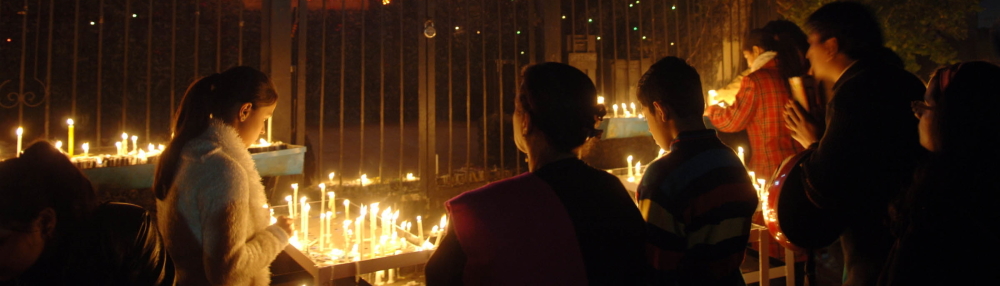
Given the importance of religion in Ukrainian life, many citizens and refugees have turned to their faith to find answers, social assistance, and cope with mounting hardships. In one recent study published in the International Journal of Environmental Research and Public Health on coping mechanisms among Ukrainian refugees, prayer was identified as the most popular mechanism among alternatives.19 Yet, healing is elusive when churches are bombed, religious festivals interrupted, and prayers impeded. As Dr. Catherine Wanner, a Penn State University anthropologist with over three decades of field experience in Ukraine, poignantly illustrates: “Orthodoxy relies very heavily on the healing power of aesthetic experiences. Orthodox churches are magnificent, with heavy emphases on the experience of the senses with candles, music, incense, etc. There is a well-developed tradition of prayer and retreat from a fallen world — this is one way to heal. Of course, when someone has shrapnel embedded in them, it is hard to rely on the beauty of icons.”
Public Health and Religious Partnerships in Ukraine: Past and Present
Given these numerous, severe, and intercalated public health concerns, there has been ample opportunity for existing and novel partnerships to meet public health needs in Ukraine, both in the past and at present. What has successful engagement between public health and religious communities looked like in this unique context? The scope of this article precludes a full appreciation of the myriad past and ongoing efforts at this intersection of faith and public health, but a few descriptions of notable efforts follow.
Against a backdrop of the 2014 annexation of Crimea and the 2015 Revolution, Ukrainian psychologists began formal partnerships with priests within four major Ukrainian Orthodox churches to address growing mental health concerns in civilian and military settings.21 Priests and psychologists shared common goals: to educate the public about the complementary roles of psychologist and priest, to empower clergy to recognize and refer post-traumatic stress disorder (PTSD) and other mental health concerns to trained psychologists, and to care for congregants, soldiers, and civilians, collaboratively.21 Similarly, Ukrainian military chaplains, inhabiting a unique position as both members of the military and members of the clergy, have sought increased training in psychology and trauma-informed talk therapy to help shoulder the mounting psychological and spiritual burdens among soldiers and veterans.24 Such partnerships have become even more important amidst worsening violence, trauma, and lack of resources.25
Partnerships have helped clergy relieve emotional stresses tied to spiritual concerns in the current conflict, which began in 2022 just days before Orthodox Lent – a season of prayer, fasting, and repentance. As violence spread and food became scarce, deeply religious Ukrainians worried about going hungry with dwindling access to permissible foods. In a merciful response, some orthodox priests recalled the 1932-33 Holodomor and simply told their parishioners to survive. Dr. Denysenko notes, “There were pastors telling people, ‘Do what’s necessary and expedient to survive. The fast is as relaxed as it needs to be. You focus on what’s important. Turn to God. Don’t worry about fasting.’”
In addition to local clergy, faith-based organizations have played an outsize role in the public health response in Ukraine. Caritas International, a Catholic relief organization, has been active in Ukraine since the 1990s, operating under the belief that “there is no health without mental health.”26 Recently, Caritas has worked with Ukrainian religious leaders, healthcare providers, and psychologists to address the mental health crisis prompted by the 2022 Invasion.26 It has targeted services toward displaced refugees, Ukrainian veterans and their families, and victims of sexual violence and human trafficking.26 For veterans and their families, services are provided alongside the Ukrainian Ministry of Veteran Affairs and the Kyiv-Sviatoshyn Center for Social and Psychological Rehabilitation. Services include medical advice, psychological therapy, pediatric care, and social assistance. In addition, Caritas provides safe accommodations for displaced persons, along with food, clothing, and medicine. It also coordinates with the Odesa Center for Social and Psychological Assistance to care for Ukrainians living with HIV or AIDS. 25 As of 2023, Caritas reports providing health services to over 65,000 Ukrainians and safe housing to over 305,000 refugees.27
The Romanian Orthodox Church has also provided significant aid to Ukrainian refugees fleeing war.28 Siret, one of the main border crossings between Ukraine and Romania, has become a volunteer site for hundreds of Orthodox priests, parishioners, and laypeople. These volunteers conduct needs assessments and provide tangible goods before people move on. Orthodox churches serve as gathering spaces and temporary shelters while refugees figure out next steps. Monks perform daily prayers with migrants in nearby monasteries, offering sacraments and a space to congregate as well. Translators guide newcomers to tents with food, shelter, clothing, and medical attention.28 Dr. Wanner describes the importance of these small gestures for frightened travelers worried about their loved ones: “Who do you trust? This is where we go back to religion. Often, sacred spaces are seen as having healing properties. You go to a monk and put a prayer request in, and he then prays for that person – this, too, is seen as a form of healing.”
Rebuild Ukraine is another Minnesota-based NGO of note. Rebuild Ukraine fundraises to assist with evacuation and send medical supplies, food, and transportation to ordinary Ukrainians and the military.29 As of the time of this Bulletin’s publication, it reports having delivered more than 8,000 tourniquets to military units and hospitals, 1,300 packs of medical supplies with prescription medications, hundreds of military bundles (camouflage uniforms, boots, backpacks, tents, and thermal clothing), and twelve multi-purpose vehicles for rescue workers on the ground.29 To integrate the importance of religion into their work, Rebuild Ukraine partners with the Catholic Near East Welfare Association, tying religious iconography, deeply important to Orthodox Christians, into fundraising and deliverables.29, 30, 31 This collaboration led to the “Icons on Ammo Boxes” exhibit, which showcases icons on the lids of used ammunition boxes, painted by two Kyiv-based artists. 30 Touring the United States, the exhibit raises money while celebrating liturgy and sacraments “despite war and in the midst of the war.”31
Conclusion
Ukraine and its people have been the targets of colonization and aggression for centuries.1-4 In recent memory, the country has been contested, divided, and ruled by Poland, Lithuania, the Austrian Empire, the Ottoman Empire, and the Tsardom of Russia. Yet, amidst great turmoil and turnover, Ukraine has clung to religion and spirituality while asserting its independence from aggressors for centuries. This tenacious spirit has also sustained extraordinary emergency public health responses over the past year, often led by religious communities, whether emanating from the bruised hands of clergy, extending from the walls of Romanian churches, or coming through faith-based organizations fundraising outside the nation’s borders. “In areas undergoing heavy bombing (Mariupol, for example),” Dr. Wanner observes, “many relief organizations would not go in. It was the religious organizations who continued to go with their donations from transnational religious networks and to distribute much needed humanitarian aid, even in active combat zones.” May we heed the power of these committed partnerships grounded in reverence for religion, spirituality, and life, even as we lament the tens of thousands lost to war and death.
References
- Houston, Aidan; Mandaville, Peter Ph.D. “The Role of Religion in Russia’s War on Ukraine.” United States Institute for Peace, USIP. Published 17 March 2022. Accessed 5 February 2023.
- The Center for Holocaust & Genocide Studies. “Holodomor: The Ukrainian Genocide.” College of Liberal Arts, University of Minnesota. Published 2023. Accessed 16 February 2023.
- World Nuclear Association. “Chernobyl Accident 1986.” World Nuclear Association, Safety of Plants. Updated April 2022. Accessed 16 February 2023.
- Simoneau, M; Khan, H. “War amid a Pandemic: The Public Health Consequences of Russia’s Invasion of Ukraine.” Critical Questions, Center for Strategic and International Studies (CSIS). Published 22 April 2022. Accessed 5 February 2023.
- Levy, Barry S M.D., Leaning, Jennifer M.D., S.M.H. “Russia’s War in Ukraine – The Devastation of Health and Human Rights.” N Engl J Med 2022; 387:102-105. DOI: 10.1056/NEJMp2207415. https://www.nejm.org/doi/full/10.1056/NEJMp2207415
- Oleskiw, S. “The great man-made famine in Ukraine 1932-32: political, social, and economic reasons for the famine.” Ukr Review (Lond). 1983;31(2):6-18. Accessed from Strauss Health Sciences Library 10 February 2023. ISSN: 0041-6029. PMID: 11618233.
- Lumey, L H, Khalangot M D, Vaiserman A M. “Association between type 2 diabetes and prenatal exposure to the Ukraine famine of 1932-33: a retrospective cohort study.” Lancet Diabetes Endocrinol. 2015 Oct;3(10):787-94. Epub 2015 Sep 3. Accessed 8 February 2023. DOI 10.1016/S2213-8587(15)00279-X. PMID: 26342852.
- Vaiserman, A M, Lushchak O. “Prenatal famine exposure and adult health outcomes: an epigenetic link.” Environ Epigenet. 2021 Nov 24; 7(1):dvab013. eCollection 2021. Accessed 8 February 2023. DOI: 10.1093/eep/dvab013.
- Caudill, M. “Environment, Health, and Activism in Ukraine.” Presented at Taras Shevchenko Conference, Indiana University, Ukrainian Studies Organization. Presented March 2020. Accessed through ResearchGate 20 February 2023. DOI: 10.13140/RG.2.2.34514.50888.
- Unicef Ukraine. “Water, sanitation, and hygiene (WASH).” Unicef Ukraine. Updated 2023. Accessed 20 February 2023.
- Twigg, J. “Ukraine’s healthcare system is in critical condition again.” UkraineAlert, Atlantic Council. Published 21 July 2020. Accessed 30 January 2023.
- Rogers, Lindsey MA. “The Vulnerability of Health Care in Conflict: Ukraine and Beyond.” Johns Hopkins Bloomberg School of Public Health. Published 14 April 2022. Accessed 5 February 2023.
- Katholische.de. “Patriarch Kirill: Fallen soldiers will have their sins forgiven.” Katholische.de. Updated 26 September 2022. Accessed 5 February 2023.
- De Vos, C, MSc, JD, PhD et. al. “Destruction and Devastation: One Year of Russia’s Assault on Ukraine’s Health Care System.” Physicians for Human Rights, Attacks on Health Care, Ukraine. Published 21 February 2023. Accessed 21 February 2023.
- Kluger, J; Law, T. “Polio Makes a Comeback in Ukraine as War Halts Vaccination Campaign.” TIME, Health, Vaccines. Published 9 March 2022. Accessed 10 February 2023.
- Malchrzak, W et. al. “COVID-19 Vaccination and Ukrainian Refugees in Poland during Russian-Ukrainian War—Narrative Review.” Vaccines (Basel). 2022 Jun 10(6):955. Published online 22 Jun 16. Accessed 10 February 2023. DOI: 10.3390/vaccines10060955.
- WHO. “Ukrainian woman 39 weeks pregnant hides in bomb shelter with looming fears of hospital accessibility.” ABC News, Ukraine. Published 28 February 2022. Accessed 10 February 2023.
- Oviedo, L. et. al. “Coping and Resilience Strategies among Ukrainian War Refugees.” Int J Environ Res Public Health. 2022 Oct; 19(20): 13094. Published online 2022 Oct 12. Accessed 19 February 2023. DOI: 10.3390/ijerph192013094.
- WHO. “One hundred days of war has put Ukraine’s system under severe pressure.” The World Health Organization. Published 2 June 2022. Accessed 30 January 2023.
- Tomkiw, L. “Ukraine War Forces a Nation to Talk About a Taboo: Post-Traumatic Stress Disorder.” International Business Times, World. Published 4 April 2015. Accessed 30 January 2023.
- Panasytska, O; Koroy ,E, JD. “The Geneva Conventions: How Russia breaches them and blames Ukraine for it. VoxCheck explains.” Vox Ukraine, Analytics and Society. Published 14 March 2022. Accessed 23 February 2023.
- Lu, J. “The ‘Rules of War’ Are Being Broken. What Exactly Are They?” Goats and Soda, NPR. Published 28 June 2018. Accessed 6 February 2023.
- Wanner, C. “Empathic Care and Healing the Wounds of War in Ukraine” Emotions and Society. 2021; 3(1): 155-70. https://doi.org/10.1332/263169021X16139626598365.
- The Network for Religious and Traditional Peacemakers. “Religion and Spirituality: A Potential Source of Strength for Ukraine’s Displaced.” Updated 2023. Accessed 30 January 2023.
- Caritas Ukraine. “What we do.” Updated 24 February 2023. Accessed January and February 2023.
- Caritas-Spes Ukraine. “The war in Ukraine – Results of Rapid Response Projects.” February 2023. Accessed January and February 2023.
- Radu, A. “In Photos: Romanian Orthodox Church Offers Relief to Refugees Fleeing the War in Ukraine.” Religion Unplugged. Published 7 March 2022. Accessed January 30 2023.
- Rebuild Ukraine. Updated 2023. Accessed 22 February 2023. https://rebuild-ua.org/
- Ieraci, L. “Catholic college professor promotes iconography project to help Ukraine.” National Catholic Reporter. Published 29 April 2022. Accessed 22 February 2023.
- Reeve, R. “Rebuild Ukraine sends supplies and aid to those impacted by war.” KSTP news, ABC. Published 26 April 2022. Accessed 22 February 2023.
[1]^University of Colorado School of Medicine, Aurora, CO
[2]^Department of Ambulatory Care Services, Denver Health, Denver, CO
[3]^Center for Health Systems Research, Denver Health, Denver, CO